What to Expect During Spinal Decompression Therapy
Curious about spinal decompression but not sure what the treatment actually involves? Learn how non-surgical spinal decompression works, what a typical session feels like, and what to expect throughout your treatment.
If you've been dealing with persistent back pain, sciatica, or a herniated disc, you may have heard about spinal decompression therapy as a non-surgical treatment option. But if you've never experienced it before, the idea of being positioned on a specialized table that gently stretches your spine might raise a few questions. Does spinal decompression hurt? How long does a session take? Will you feel relief immediately? And how do you know if it's right for you? At True Wellness Integrated Medicine, we believe patients should understand their treatment options before getting started. Here's what you can expect from your initial evaluation through a typical spinal decompression session.
What Is Non-Surgical Spinal Decompression?
Non-surgical spinal decompression is a form of motorized traction designed to apply controlled stretching forces to specific areas of the spine. The treatment aims to temporarily reduce mechanical loading on spinal structures and may help relieve symptoms associated with certain disc-related conditions. Spinal decompression is sometimes considered for patients experiencing herniated or bulging discs, degenerative disc problems, sciatica, or certain types of chronic back and neck pain. Unlike surgery, the treatment doesn't involve incisions, anesthesia, or an extended surgical recovery period. However, decompression isn't appropriate for every spinal condition, and evidence supporting its effectiveness varies depending on the diagnosis and treatment protocol. That's why a thorough evaluation is an important first step.
Step 1: Your Initial Spinal Decompression Evaluation
Before beginning treatment, your provider needs to understand what's causing your pain and whether spinal decompression is an appropriate option. Your evaluation typically begins with a discussion of your symptoms, medical history, previous injuries, and treatments you've already tried. Your provider may ask where your pain occurs, whether it travels into your arms or legs, what activities make it worse, and how long you've been experiencing it. A physical examination may assess spinal mobility, muscle function, reflexes, strength, sensation, and other findings relevant to your symptoms. Existing X-rays or MRI results may also be reviewed when clinically appropriate. Additional imaging isn't automatically necessary for every patient. This evaluation helps determine whether your symptoms may be related to a disc or nerve problem and whether decompression is suitable for your condition. Certain conditions, including spinal instability, some fractures, and other medical concerns, may make traction inappropriate. Your provider should review these factors before recommending treatment.
Step 2: Getting Positioned on the Decompression Table
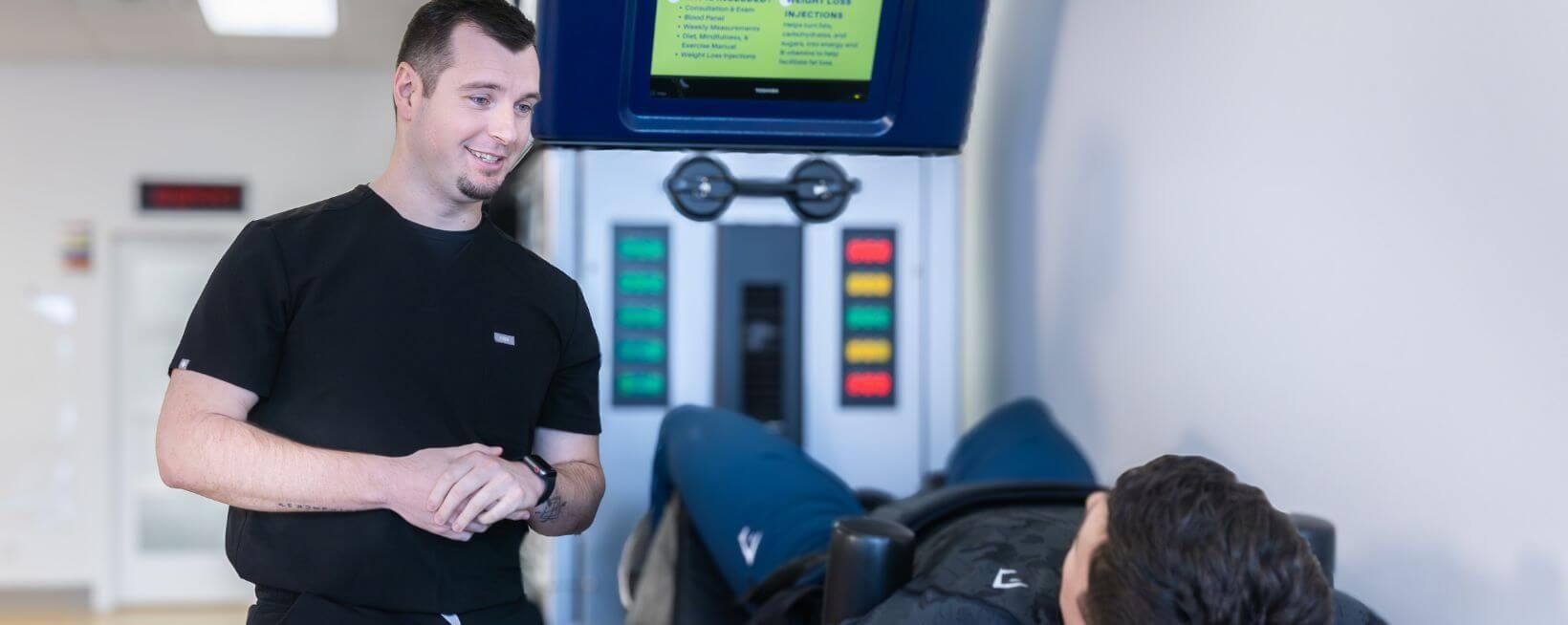
If spinal decompression is recommended, your provider or trained team member will explain the equipment and help position you on the treatment table. Depending on the area being treated and the equipment used, you may lie on your back or stomach. For lumbar decompression, a support or harness system is typically positioned around your pelvis and torso to help apply controlled traction. Cervical decompression uses a different setup designed for the neck. The table is then adjusted to your body and treatment needs. You remain awake throughout the session, and the treatment is non-invasive. Your provider should explain how the equipment works and how to communicate if you experience discomfort.
Step 3: What Does Spinal Decompression Actually Feel Like?
This is one of the most common questions patients have. During treatment, the decompression table applies gentle, controlled traction to the targeted area of your spine. The force may gradually increase and decrease throughout the session according to the treatment settings. Many patients describe the sensation as a gentle pulling or stretching through the lower back or neck. Others notice very little movement once they're comfortably positioned. Spinal decompression should not involve severe or sharp pain. Some patients may experience temporary soreness or discomfort, particularly when beginning treatment. If you experience increasing pain, new radiating symptoms, numbness, or other unusual sensations, tell your provider immediately so the treatment can be reassessed. The goal is to apply an appropriate level of traction, not to stretch the spine as forcefully as possible.
Step 4: How Long Does a Spinal Decompression Session Take?
A typical motorized spinal decompression session may last approximately 15 to 30 minutes, although treatment times vary depending on the equipment, protocol, and individual care plan. You may spend additional time at the office if your appointment includes an assessment, therapeutic exercises, or other treatments. One of the conveniences of non-surgical decompression is that it generally doesn't require downtime associated with a surgical procedure. Many patients can resume appropriate everyday activities afterward, although your provider may recommend temporary modifications based on your symptoms.
Step 5: What Happens After Your Session?
After treatment, your provider may ask how you're feeling and whether your symptoms have changed. Some patients report temporary symptom relief, while others notice little immediate difference. It's also possible to experience mild soreness after a session. Your provider may recommend specific exercises, movement modifications, or other therapies to complement treatment. These recommendations are intended to address contributing factors such as reduced mobility, muscle weakness, or movement limitations. Spinal decompression may be one component of your care, but restoring strength, movement, and everyday function often requires a broader rehabilitation strategy.
How Many Spinal Decompression Sessions Will You Need?
There isn't one treatment schedule that works for everyone. The number and frequency of visits depend on your diagnosis, symptom severity, response to treatment, and overall care plan. Some protocols involve multiple appointments over several weeks, but a specific number of sessions should not be treated as a guarantee of improvement. Your provider should explain the proposed treatment schedule, establish realistic goals, and monitor your progress along the way. If you're not improving as expected, your plan may need to be modified or another treatment approach considered.
Is Spinal Decompression Better Than Surgery?
Spinal decompression and spinal surgery serve different purposes and aren't interchangeable treatments. For certain patients without urgent neurological concerns, conservative care may be appropriate before considering surgery. This can include therapeutic exercise, physical therapy, medication when indicated, and other non-surgical approaches. Motorized spinal decompression may be considered in selected cases, but research has not established that it consistently outperforms other forms of conservative care. Surgery may be necessary or appropriate for certain structural problems, progressive neurological deficits, or persistent symptoms that haven't responded to appropriate treatment. Seek urgent medical attention if you develop new bowel or bladder dysfunction, numbness around the groin or saddle area, or new or progressive leg weakness. The right decision depends on your diagnosis, medical history, symptoms, and treatment goals.
Why an Integrated Treatment Approach Matters
Back pain and sciatica don't always come from one isolated problem. Disc irritation, joint dysfunction, muscle tension, reduced strength, and movement patterns can sometimes contribute to symptoms simultaneously. That's why spinal decompression shouldn't automatically be viewed as a standalone solution. At True Wellness Integrated Medicine, our approach focuses on evaluating the different factors contributing to your pain. Depending on your condition, a treatment plan may incorporate spinal decompression alongside chiropractic care, soft tissue therapy, therapeutic exercise, or other appropriate medical services. The objective is to help improve comfort and function while addressing the factors that may be contributing to recurring symptoms.
Find Out if Spinal Decompression Is Right for You
If you've been struggling with back pain, sciatica, or disc-related symptoms, understanding your options is an important first step. Non-surgical spinal decompression may be worth discussing for certain conditions, but determining whether it's appropriate requires more than matching your symptoms to a treatment advertised online.
At True Wellness Integrated Medicine, we take the time to evaluate your condition, explain available options, and develop a treatment plan based on your individual needs. Interested in spinal decompression therapy in Chattanooga? Schedule a spinal decompression evaluation with True Wellness Integrated Medicine to learn what's causing your symptoms and whether non-surgical decompression may be an appropriate part of your care.