Can You Fix Back Pain Without Surgery or Medication?
Back pain doesn't automatically mean surgery, injections, or long-term medication. For many conditions, a targeted non-surgical treatment plan can address the underlying problem, improve function, and help you get back to the activities you've been avoiding.

When back pain starts interfering with your work, sleep, exercise, or everyday activities, it's easy to assume your options eventually come down to medication or surgery.
That isn't always the case.
Many common causes of back pain can initially be managed with conservative, non-surgical treatment. The right approach depends on what's actually causing your symptoms, how long you've been experiencing them, whether nerves are involved, and how the condition is affecting your ability to function.
The goal shouldn't simply be avoiding surgery at all costs. It should be determining whether there is an effective, less invasive way to address your condition before considering more aggressive treatment.
For many patients, there is.
Why Does Back Pain Become Chronic?
Back pain isn't one condition. It's a symptom that can originate from muscles, joints, discs, nerves, ligaments, or a combination of structures.
Some episodes begin after an obvious injury. Others develop gradually after years of repetitive movement, prolonged sitting, physical work, previous injuries, or age-related changes in the spine.
Common contributors can include muscle strains, restricted spinal joints, herniated or bulging discs, degenerative disc disease, spinal stenosis, sciatica, arthritis, and soft tissue dysfunction.
That's why simply treating "back pain" isn't enough. Two patients can hurt in almost the same location but require very different treatment plans.
A meaningful long-term strategy starts with identifying what's causing the pain.
Do You Always Need Medication for Back Pain?
Medication can play an important role in managing acute or severe pain, and there are situations where it may be appropriate. But medication generally focuses on controlling symptoms rather than correcting the mechanical or functional factors contributing to the problem.
For example, reducing inflammation may make you feel better, but it doesn't necessarily improve restricted joint movement, strengthen muscles that aren't supporting the spine effectively, or change mechanical pressure affecting an irritated nerve.
For some patients, medication can provide a useful window of relief while the underlying problem is addressed through other forms of treatment.
Others may prefer to explore approaches that minimize their reliance on medication when medically appropriate.
The important question isn't simply, "What can make this hurt less today?" It's also, "Why does this keep hurting, and what can we do about it?"
Does a Herniated Disc Automatically Mean Surgery?
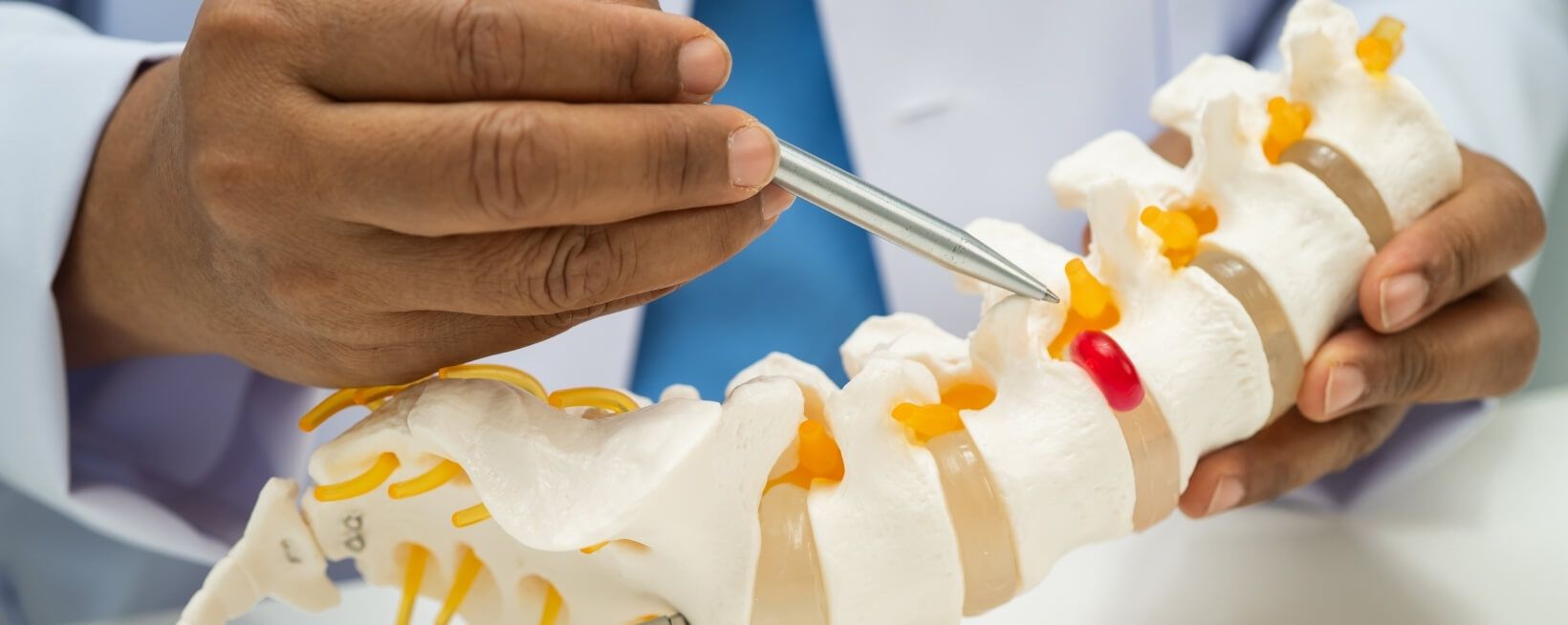
No. A herniated or bulging disc does not automatically mean you need an operation.
Disc injuries can range considerably in severity. Some produce relatively mild localized discomfort, while others irritate or compress nearby nerves and cause significant radiating pain, numbness, tingling, or weakness.
Many symptomatic disc problems are initially treated conservatively when there are no neurological or other warning signs that require urgent surgical evaluation.
The body can also change over time as inflammation decreases and, in some cases, herniated disc material reduces in size. Treatment during this period may focus on reducing irritation, improving mobility, restoring function, and helping the patient gradually return to normal activity.
For appropriately selected patients, non-surgical spinal decompression may also be considered as part of the treatment plan.
What Is Non-Surgical Spinal Decompression?
Spinal decompression is a non-invasive treatment that uses controlled traction to gently unload specific areas of the spine.
For certain disc-related conditions, the goal is to reduce mechanical pressure and provide a more favorable environment for irritated structures while symptoms improve.
Spinal decompression may be considered for appropriately selected patients dealing with conditions such as herniated or bulging discs, degenerative disc problems, sciatica, or other forms of disc-related back and leg pain.
It's important to understand that decompression isn't appropriate for every type of back pain. That's why an evaluation comes first.
At True Wellness Integrated Medicine, spinal decompression can be incorporated into a broader treatment plan rather than being treated as a one-size-fits-all answer.
Chiropractic Care Can Address Joint Mechanics
When restricted or dysfunctional spinal joints contribute to pain, chiropractic care may be one component of conservative treatment.
Adjustments are intended to improve joint movement and mechanics, which may help certain patients move more comfortably and return to normal activities.
But chiropractic care shouldn't automatically be the only treatment simply because your back hurts.
If your symptoms also involve a disc injury, significant soft tissue dysfunction, muscle weakness, nerve irritation, or another underlying problem, those factors may need to be addressed as well.
This is where an integrated approach becomes particularly valuable.
Soft Tissue Treatment and Rehabilitation Matter Too
Your spine doesn't function independently of the muscles surrounding it.
Muscles throughout the back, hips, abdomen, and pelvis contribute to movement and stability. When these tissues become weak, tight, injured, or poorly coordinated, they can influence how forces are distributed through your spine.
Soft tissue therapy may be used to address certain areas of muscular restriction or tension, while therapeutic exercise can help rebuild mobility, strength, stability, and tolerance for everyday movement.
Rehabilitation becomes especially important as pain improves. Feeling better is valuable, but being able to bend, lift, walk, exercise, work, and perform daily activities confidently is the larger goal.
Sometimes the Best Non-Surgical Plan Uses Multiple Treatments
Back pain is often multifactorial.
Imagine someone with a disc injury that has irritated a nerve. Because moving hurts, that person begins sitting differently and avoiding certain activities. Over time, muscles tighten, other muscles weaken, spinal movement changes, and the original problem is now surrounded by several secondary issues.
One treatment may not address all of that.
Depending on the diagnosis, an integrated care plan could include spinal decompression, chiropractic care, soft tissue treatment, therapeutic exercise, activity modification, medical management when appropriate, or other therapies.
The advantage isn't simply having more treatments available. It's being able to choose treatments based on what your specific condition actually requires.
How Long Does Conservative Back Pain Treatment Take?
There isn't one timeline for back pain recovery.
A relatively minor muscular injury may improve much faster than a chronic disc problem that has been present for years. Recovery can also be influenced by your age, general health, physical conditioning, occupation, previous injuries, daily activities, and consistency with treatment.
Improvement is also rarely perfectly linear. You may feel considerably better and then experience a temporary flare-up after traveling, lifting something heavy, exercising, or spending an unusually long time sitting.
Rather than focusing on a specific number of days, look for meaningful progress. Is your pain becoming less intense? Are flare-ups happening less frequently? Can you sit or walk longer? Are you sleeping better? Are activities that were difficult becoming easier?
Those functional changes can provide a more useful picture of recovery than pain level alone.
When Is Surgery Actually Necessary?
There are situations where surgery may be appropriate or necessary, and avoiding it shouldn't take priority over your safety.
Severe or progressive neurological deficits, certain structural problems, significant weakness, or symptoms associated with conditions such as cauda equina syndrome can require urgent specialist evaluation.
Changes in bowel or bladder control, numbness around the groin or saddle area, or new and progressive weakness should be evaluated promptly.
Surgery may also be considered when appropriately selected conservative treatments have failed and pain or functional limitations remain severe.
The point of conservative care isn't to claim that nobody needs surgery. It's to determine whether your particular condition can be effectively managed without it before taking that step.
What If You've Already Been Told You Need Surgery?
A surgical recommendation can feel like you've reached the end of the road, but depending on your diagnosis and urgency, you may still have questions worth asking.
What exactly is causing the symptoms? What procedure is being recommended? What is the expected benefit? What are the risks? Have reasonable conservative options already been attempted? Is there time to seek another medical opinion?
For non-emergency situations, understanding your options can help you make a more informed decision.
If conservative care is medically appropriate for your condition, an evaluation can help determine what treatments may still be worth considering. If your condition clearly requires surgical care, an appropriate referral is the responsible next step.
Don't Wait Until Surgery Feels Like Your Only Option
One of the biggest mistakes people make with recurring back pain is waiting until their quality of life has deteriorated significantly before seeking a more comprehensive evaluation.
They manage each flare-up with rest or medication, feel somewhat better, return to normal activity, and then repeat the cycle when the pain returns.
If that's been happening to you, it may be time to stop treating each episode as an isolated problem.
Finding the underlying cause earlier can give you a better opportunity to address the mechanical, muscular, disc-related, or neurological factors contributing to your symptoms before they become even more limiting.
Explore Your Non-Surgical Back Pain Options
Back pain doesn't automatically put you on a path toward surgery or long-term medication.
At True Wellness Integrated Medicine, we evaluate what's causing your symptoms and develop an individualized treatment strategy based on your condition. Depending on your needs, that may include non-surgical spinal decompression, chiropractic care, soft tissue therapy, rehabilitation, medical care, or a combination of approaches.
Our goal isn't simply to cover up the pain. It's to help you understand why you're hurting, address the factors we can treat, and help you return to the activities that back pain has been keeping you from.
If you're trying to avoid back surgery or don't want medication to be your only strategy,
schedule a comprehensive back pain evaluation with True Wellness Integrated Medicine. Let's determine which non-surgical options may be appropriate for you before you assume surgery is your only next step.