What Is Causing Your Chronic Neck Pain?
Neck pain that keeps returning may be about more than posture or muscle tension. Understanding the underlying cause can help you find the right treatment and move beyond temporary relief.

Maybe your neck feels stiff every morning. Maybe you notice an ache after several hours at your desk. Or perhaps you've been dealing with pain that travels into your shoulder or arm and never seems to completely go away.
Neck pain is common, but persistent or recurring pain shouldn't automatically be written off as something you have to live with. Chronic neck pain can have several potential causes, and sometimes more than one problem is contributing at the same time.
Finding the right treatment starts with figuring out what's actually causing your symptoms.
When Does Neck Pain Become Chronic?
Neck pain can develop suddenly after an injury or gradually over months or years. Short-term discomfort may improve with rest, movement, or other conservative measures. When pain persists for several months, repeatedly returns, or continues to interfere with your normal activities, it may be considered chronic.
But duration is only part of the picture.
Pain that regularly interrupts sleep, limits your ability to turn your head, causes frequent headaches, or makes working and exercising difficult deserves attention even if it hasn't been present for months.
The pattern of your symptoms can also provide important clues. Pain that stays localized around the neck and shoulders may have a different source than pain accompanied by numbness, tingling, or weakness traveling into an arm or hand.
Poor Posture and Prolonged Sitting
Posture gets blamed for a lot of neck pain and sometimes for good reason!
Hours spent looking at a computer, working from a laptop, driving, or looking down at a phone can place sustained demands on the muscles and joints of the neck. Over time, certain muscles may become tight or fatigued while others become weaker.
But simply being told to "sit up straight" usually isn't enough.
Your workstation setup, movement habits, muscle strength, mobility, and the amount of time you spend in one position can all contribute. If your work requires prolonged sitting, incorporating regular movement and addressing the physical imbalances that have developed may be more useful than trying to maintain one supposedly perfect posture all day.
Muscle Tension and Soft Tissue Problems
The muscles surrounding your neck, shoulders, and upper back work together to support and move your head. When those muscles become tight, overworked, injured, or imbalanced, they can contribute to persistent pain and restricted movement.
Stress can also play a role. Some people unconsciously tense their shoulders or neck during stressful periods, which can increase muscular discomfort.
Trigger points and other soft tissue restrictions may produce pain locally or refer discomfort into nearby areas, including the shoulders and head. This is one reason chronic neck pain sometimes needs more than spinal treatment alone, the surrounding muscles and soft tissues may need to be addressed as part of the overall plan.
Joint Dysfunction and Reduced Mobility
Your cervical spine contains multiple small joints that allow your neck to bend, rotate, and move in different directions. When these joints become irritated or aren't moving normally, you may experience stiffness, localized pain, or difficulty turning your head.
Previous injuries, repetitive movements, prolonged positioning, and age-related changes can all influence joint function.
Chiropractic care may be useful for certain patients when joint mobility is part of the problem. However, if muscle dysfunction, disc injury, or nerve irritation is also present, addressing joint movement alone may not provide complete or lasting relief.
That's why determining what's contributing to the pain matters before deciding on a treatment strategy.
Degenerative Changes in the Cervical Spine
Your spine naturally changes as you age. The discs between your vertebrae can gradually lose hydration and height, while joints may develop arthritic changes or bone spurs.
These changes are often referred to as cervical degeneration or cervical spondylosis.
Importantly, degenerative changes on an X-ray or MRI don't automatically mean they're responsible for your pain. Many people have age-related spinal changes without significant symptoms.
However, when degeneration begins affecting joint movement, narrowing spaces around nerves, or contributing to inflammation, it can become part of the chronic neck pain picture.
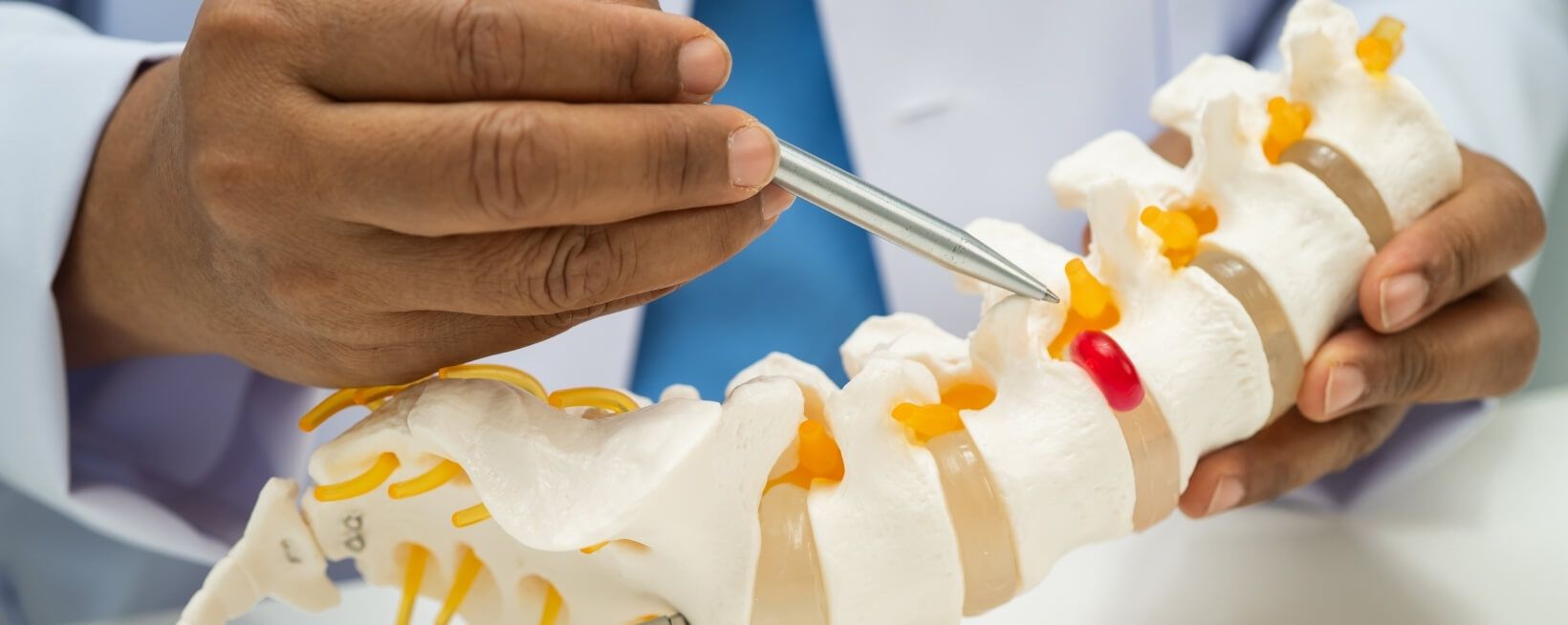
Bulging and Herniated Discs
The discs between the vertebrae act as cushions and help your cervical spine move and absorb forces.
When a disc bulges or herniates, it can sometimes irritate nearby structures or place pressure on a nerve root.
Symptoms may remain in the neck, but nerve involvement can cause pain that radiates into the shoulder, arm, or hand.
You may also experience numbness, tingling, burning sensations, or weakness.
Disc-related neck pain requires a different approach than simple muscular soreness. For appropriately selected patients, treatments such as non-surgical spinal decompression may be considered as part of a broader care plan designed to reduce mechanical stress and address associated symptoms.
Nerve Irritation or Compression
If your neck pain travels into your arm or hand, a nerve may be involved.
Cervical radiculopathy occurs when a nerve root in the neck becomes irritated or compressed. A herniated disc, degenerative changes, or narrowing around the nerve can contribute.
Symptoms can include radiating pain, numbness, tingling, altered sensation, and weakness. The specific area affected may help your provider determine which nerve is involved.
These symptoms are important to evaluate rather than repeatedly treating them as muscle tension. Identifying why the nerve is irritated can significantly influence which treatment options are appropriate.
Previous Injuries and Whiplash
Sometimes today's neck pain began with an injury that happened months or even years ago.
Car accidents are a common example. The rapid acceleration and deceleration associated with whiplash can affect muscles, ligaments, joints, and other structures in the neck. Sports injuries, falls, and other trauma can have similar effects.
Some people recover relatively quickly, while others continue experiencing stiffness, headaches, reduced mobility, or recurring pain long after the initial injury.
A history of trauma is therefore an important part of evaluating chronic neck pain, even if the injury doesn't seem recent.
Headaches Can Sometimes Be Connected to Your Neck
Not every headache originates in the head.
Problems involving the muscles, joints, and nerves of the upper cervical spine can sometimes contribute to headaches that begin around the neck or base of the skull. These are often referred to as cervicogenic headaches.
If your headaches seem to occur alongside neck stiffness, restricted movement, or certain positions, the cervical spine may be worth evaluating as part of the larger picture.
Because headaches have many possible causes, however, recurring or unusual headaches should be properly assessed rather than automatically attributed to your neck.
Why Chronic Neck Pain Often Needs More Than One Treatment
One of the challenges with chronic neck pain is that there may not be one isolated problem to "fix."
A patient could have restricted cervical joints, tight muscles, poor workstation habits, and an irritated disc at the same time. Treating only the muscles may provide temporary relief. Adjusting the joints without addressing soft tissue dysfunction may leave another contributor untreated. And a disc or nerve problem may require an entirely different strategy.
Depending on your diagnosis, an integrated treatment plan might incorporate chiropractic care, soft tissue therapy, therapeutic exercise, spinal decompression for appropriate disc-related conditions, medical management, or other therapies.
The goal isn't to use every treatment available. It's to identify the specific factors contributing to your pain and choose the combination that makes sense for you.
When Should You Have Chronic Neck Pain Evaluated?
Consider scheduling an evaluation when neck pain keeps returning, isn't improving with basic self-care, or is beginning to interfere with sleep, work, exercise, or everyday activities.
An evaluation becomes particularly important when symptoms include pain traveling into an arm, persistent numbness or tingling, reduced grip strength, or noticeable weakness.
Certain symptoms warrant more urgent medical attention. Seek prompt evaluation for severe neck pain following significant trauma, new or progressive weakness, problems with balance or coordination, changes in bowel or bladder control, fever associated with severe neck stiffness, or other sudden neurological symptoms.
Stop Treating Every Flare-Up Like a New Problem
If your neck pain disappears temporarily only to return a few days or weeks later, repeatedly managing each flare-up may not address what's keeping the cycle going.
At True Wellness Integrated Medicine, we take a comprehensive approach to musculoskeletal pain. That means looking at your joints, muscles, discs, nerves, movement patterns, health history, and symptoms to better understand what may be contributing to your chronic neck pain.
From there, we can develop an individualized treatment plan using the therapies appropriate for your condition rather than relying on the same treatment for every patient.
If chronic neck pain is interfering with your work, sleep, exercise, or daily life,
schedule an evaluation with True Wellness Integrated Medicine. Finding out what's causing your pain is the first step toward determining what to do about it.